Nest Application
The Problem
Social platforms marketed toward connection often replicate dating-app mechanics such as swiping, infinite scrolling, and reward loops. For students, especially those navigating college life for the first time, these patterns can increase emotional strain, surface-level interactions, and loneliness rather than reduce it.
Within the American University context, students face:
Large workloads and shifting schedules
Difficulty forming connections outside their major
Unclear social intentions on existing platforms
Emotional fatigue from ghosting and abrupt conversations
The core challenge was designing a social platform that fosters intentional, healthy connections without replicating harmful engagement-driven patterns.
Project Overview
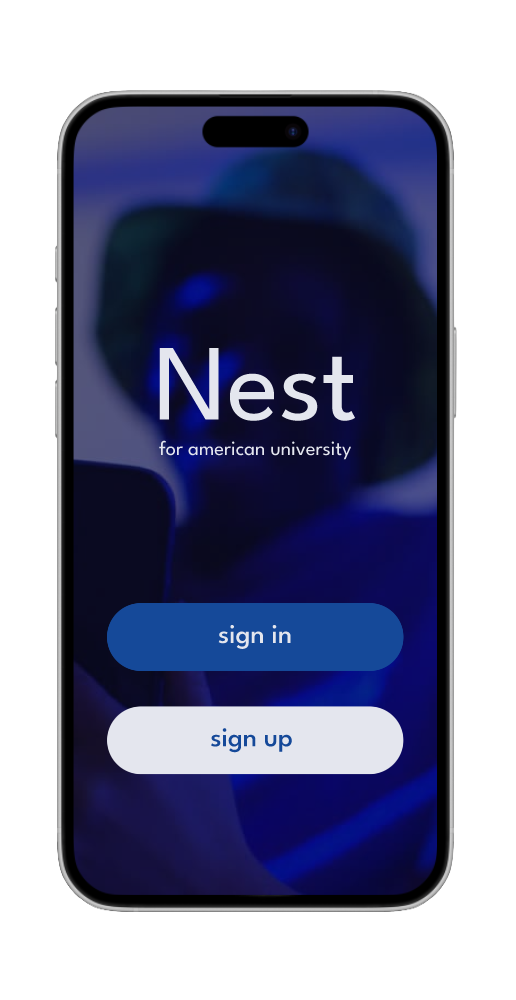
Nest is a calm, multi-intentional social connection app designed specifically for American University students. Unlike dating-app-style platforms that prioritize engagement metrics and fast judgment, Nest centers intentional connection, emotional well-being, and trust. The platform supports friendship, collaboration, dating, and skill-sharing through curated discovery rather than infinite scrolling.
Research & Insights
Research Methods
User interviews with 5 American University students
Competitive analysis of existing social platforms
Review of academic literature on social well-being, belonging, and calm technology
Key Findings
Students expressed a strong need for:
Clear intention-setting (friendship, collaboration, dating, skill-sharing)
Curated discovery without infinite scrolling or swiping
Compatibility indicators beyond photos (MBTI, zodiac, questionnaires)
Profile customization that reflects identity and personality
Trust and safety grounded in AU community values
Healthier communication tools, including respectful conversation closure
Competitive Landscape
Dating Apps (Tinder, Bumble, Hinge)
Fast-paced judgment and infinite scrolling
Monetized access to meaningful features
Shallow interaction patterns
Friendship Apps (Bumble BFF, YikYak, MeetMe)
Repurposed dating-app interfaces
Lack of true structural differentiation
Networking Platforms (LinkedIn, Discord, Geneva)
Functionally effective but emotionally impersonal
Professional norms limit personal connection
These platforms fail to support the nuanced social needs of university communities.
User Personas
Maya Thompson
Age: 20 | Undergraduate | International Relations
Goals: Build meaningful friendships outside her major, collaborate on projects
Pain Points: Overwhelmed by dating apps, unclear social intentions
Alex Rivera
Age: 22 | Graduate | Computer Science
Goals: Skill-sharing, study partnerships, occasional dating
Pain Points: Impersonal professional platforms, ghosting experiences
User Scenarios
Maya sets her intention to Friendship and browses curated weekly match drops.
Alex selects Collaboration, completes a compatibility questionnaire, and connects using anti-ghosting tools.
Maya browses skill-sharing opportunities to plan a campus event and schedules an in-person meeting with a verified AU student.
Goals & Success Criteria
Reduce cognitive and emotional overload during discovery
Make social intentions explicit and respected
Encourage deeper, more intentional connections
Build trust through verification and safety features
Support multiple connection types within one platform
Success Indicators:
Onboarding completed in under 10 minutes
Clear understanding of user intentions
Calm, low-pressure discovery experience
Increased user comfort and confidence
Creative Direction & Design Principles
Core Principles
Calm technology over compulsive engagement
Intentional discovery instead of endless choice
Emotional safety and clarity
Community trust and inclusion
Visual Direction
Soft, calming color palette
Minimal typography and interface clutter
Clear intention labels and visual hierarchy
UX Strategy & Information Architecture
Key Features
Intention-based onboarding (Friendship, Collaboration, Dating, Skill Sharing)
Curated weekly match drops (no infinite scroll)
Personality-driven profiles
AU email verification
Anti-ghosting conversation closure templates
Usability Requirements
Intuitive navigation with minimal cognitive load
Clear distinction between user intentions
Profiles designed for expression beyond photos
Design & Prototyping
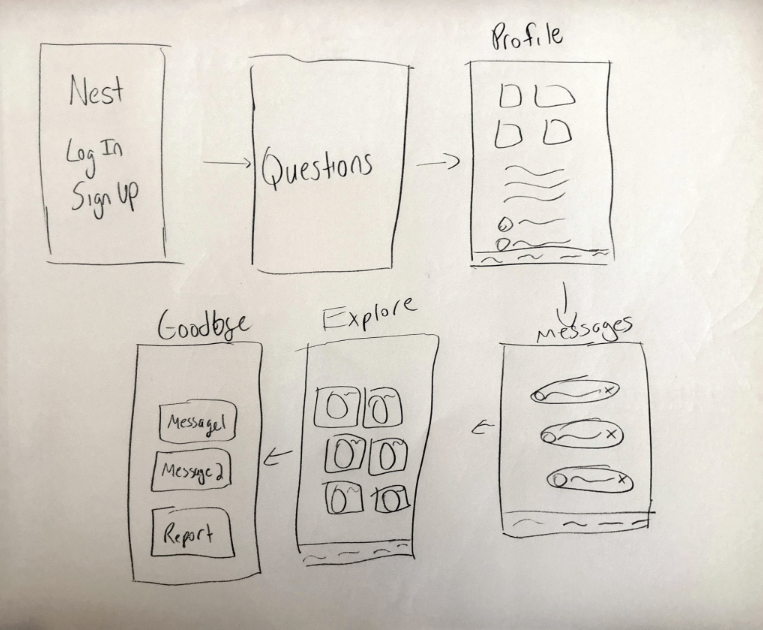
Low-Fidelity Wireframes
Pinterest-style discovery grids
Minimal text and visual noise
Emphasis on intention clarity
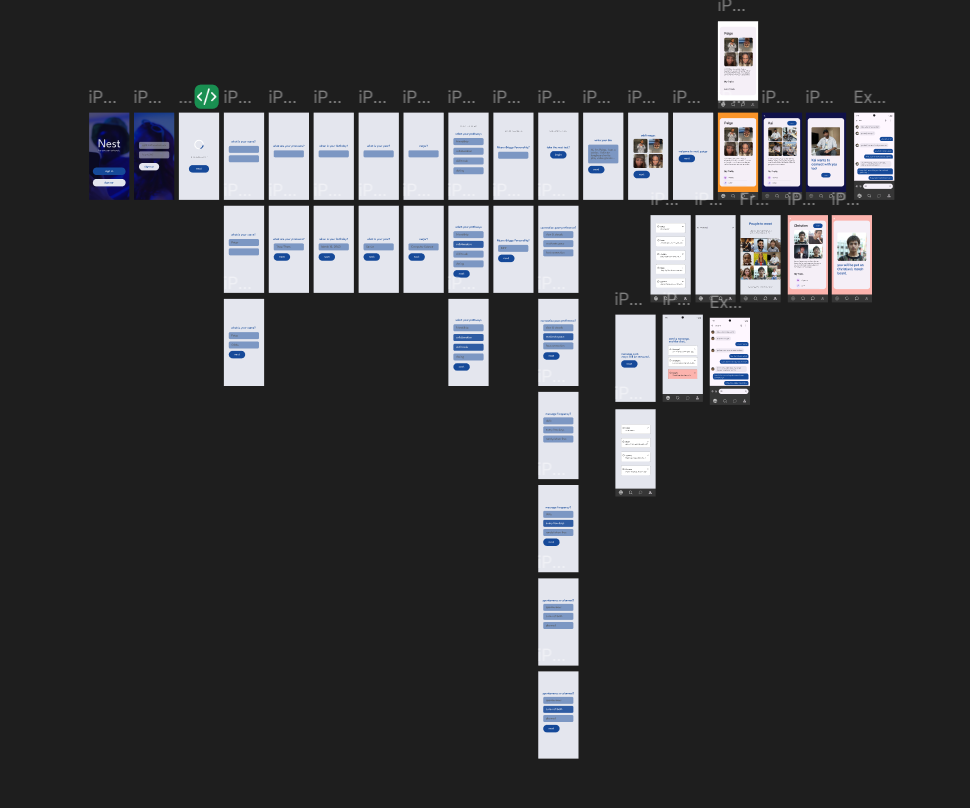
High-Fidelity Prototype
Functional navigation and onboarding
Messaging system with anti-ghosting tools
Verified AU student indicators
Calm interaction patterns applied throughout
Usability Testing & Iteration
Testing Plan
Participants: 3 AU students (ages 20–22)
Tasks: Onboarding, discovery boards, messaging features
Metrics: Emotional comfort, clarity, ease of use
Key Issues Identified
Confusion between Collaboration and Skill Sharing intentions
Difficulty locating goodbye templates
Misunderstanding curated match updates
Unclear reporting mechanism
Iterations Implemented
Allowed multiple intentions to be selected
Simplified profile sections
Added clearer reporting and exit options
Outcome & Impact
The Nest prototype demonstrates that a university-tailored, multi-intentional social platform is both feasible and ethically responsible. By limiting choice, emphasizing calm design, and prioritizing trust, Nest reduces decision fatigue and improves emotional comfort during social discovery.